Search engine optimisation (SEO) strategies are crucial if your company wants to develop its digital marketing plan and promote its brand. A solid SEO plan will inevitably increase website visitors from natural search engine results. This beginner’s guide outlines three ranking elements to take into account in order to perform this successfully:
1. What Is SEO? Attract Quality Traffic
First, it’s crucial to draw in quality visitors to your website, therefore you should constantly work to capture their curiosity. In addition to making a sale significantly easier if the visitor is already interested, attracting visitors who have no interest in what you’re selling can negatively impact many other SEO factors.
For instance, if people land on your homepage and realise it’s not what they were looking for, they’ll click away in a matter of seconds, resulting in a high bounce rate.
What can you do, then, to make sure that the traffic you do get is good traffic? The objective is to make sure that every time your ideal customer types in a search that is connected to your business, your website shows up in the Google search results. You want them to immediately click on your website by seeing it prominently displayed on their results page. You must use the proper SEO keywords in your piece of content to do this.
SEO Keyphrases
Generally speaking, conducting keyword research is the initial stage in developing an SEO plan. Users of search engines are offered with a variety of options to pick from when they type their search term keywords (search queries, words, and phrases) into a search engine. To make sure that your website shows up for the relevant keywords, your website content must match the intent of the search, if you want to be at the top of that list.
For example; If your company sells windows and a user types in “uPVC windows” you want to make sure that your website is found.
Google and other search engines will add you to the search results by rating your website or web page, comparing how good it is compared to other people with similar content.
2. What Is SEO? Increase Traffic Quantity
You may now think about increasing traffic to your website after your targeted audience is arriving there via search engine results pages (SERPs).
On-Page SEO
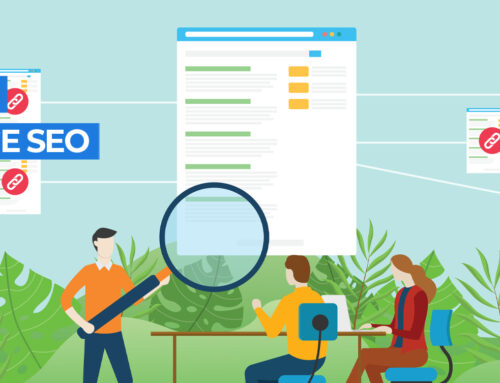
On-page SEO, sometimes referred to as on-page optimisation, is the process of adding a variety of optimisation techniques to your web pages in order to make them easier to find on search engines. When creating high-quality content, it is important to keep the following in mind as it will raise your click-through rate.
- Every website page should focus on a keyword that you wish to rank for in Google . Make sure your headers contain these keywords.
- In order to provide a satisfying user experience, the content must appropriately address the search engine user’s goal.
- Include both high-quality external links that add value to the reader’s experience as well as internal links that point the reader to other blog posts and webpages on your website. These will raise your link equity, which improves your search rankings.
- Where possible, include original, pertinent photos.
- Check the page speed; if it’s too slow, visitors will leave and your bounce rate will suffer.
- In order to entice search engine visitors to click through when they find your website in their search results, add a well-written title tag and meta description that uses the desired keywords.
- Your website should be optimised to look good on mobile devices.
Off-Page SEO
It’s wise to become familiar with backlinks, the cornerstone of off-page SEO, as they can help you improve traffic to your website. Backlinks, often referred to as inbound links or link building, are produced when one website links to another in order to express their “vote of confidence” that the linked page is of a high calibre. They are therefore a crucial component of how search engines function.
However, search engines are smart and may recognise a sponsored link scheme when it comes to constructing backlinks to your website. Therefore, any backlinks you obtain should be genuine, reliable, and pertinent.
Sponsored posts or unpaid guest posts can both generate trustworthy backlinks; the key is that the material should add high-quality value to the target website and its audience.
Other parts of off-page SEO, besides building backlinks, can also aid in boosting the volume of visitors to your website.
- Social media optimisation: Make use of social media sites to increase the online visibility of your company.
- Influencer marketing: Incorporate product recommendations and placements from relevant bloggers or influencers in your sector.
- Unlinked Brand Mentions: Look for references to your company on other websites and ask them to link to you.
3. Organic SEO vs Paid Traffic
It’s important to note that there is a paid option to have your website appear at the top of search engine result pages now that you understand how to draw high-quality SEO traffic to your website. Why therefore invest all this time and effort in on-page and off-page SEO strategies when you can simply pay for a high ranking on Google?
Let’s first discuss what paid traffic is. Pay-per-Click ads, for example, will put your website at the top of search engine result pages. As a result, your website will be displayed at the top of search results when consumers enter your target keywords or phrases into Google, Yahoo, or Bing.
It’s a well-liked and efficient quick-fix option because it can instantly position your website above the competition, increasing the volume of traffic to your website. Additionally, tracking the success of a paid campaign is simpler.
However, if you don’t keep an eye on your expenses, relying only on sponsored traffic can be problematic. Although purchasing bought traffic ensures that your listing will be seen by potential site visitors, the cost of paid searches can increase over time. To avoid this, keep track of your expenses and determine whether they are equal to the number of sales you are producing as a direct result.
Additionally, your paid search engine positions will only be displayed while you are paying, so if you stop, website traffic will drop immediately. However, if you continue to monitor your organic SEO traffic, this is a far more evergreen strategy and it will continue to increase the visibility of your website.
Since organic SEO traffic establishes your brand’s credibility and frees you from having to pay to keep your ranking, it is often regarded as the best way to gain traffic to your website. However, it is advised to utilise a combination of both when determining which marketing option is best. This is due to the fact that while some web users prefer to utilise search engines to identify websites, others frequently click on paid advertisements.
Therefore, a solid marketing strategy uses both organic search engine optimisation and paid searches to aid in your company’s online visibility via search engines.